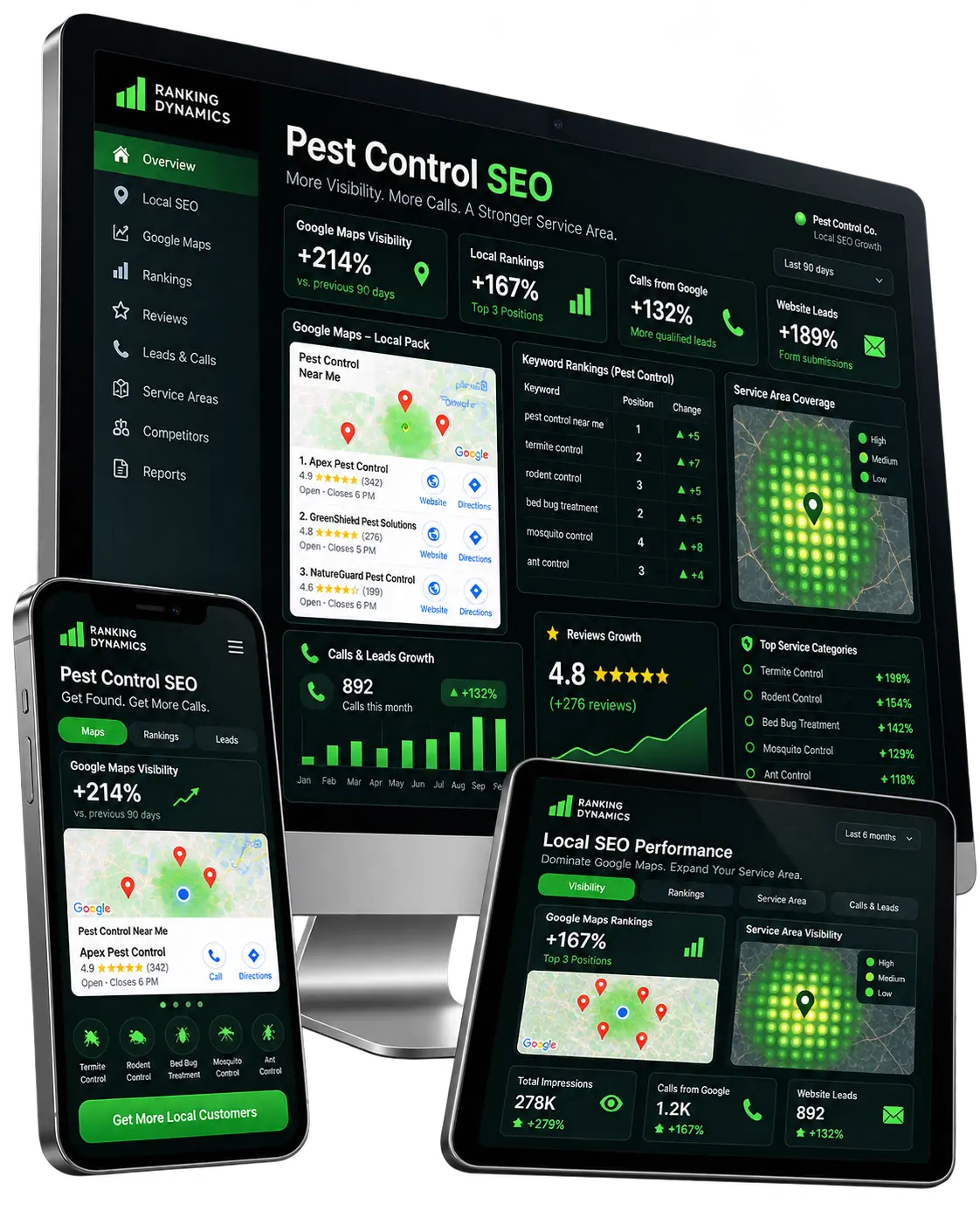

Pest Control SEO Services for More Local Leads


 Reach homeowners and businesses when pest problems trigger a search. Build stronger visibility across Google Search and Maps for the services and markets that matter most.



What Is SEO for Pest Control Companies?
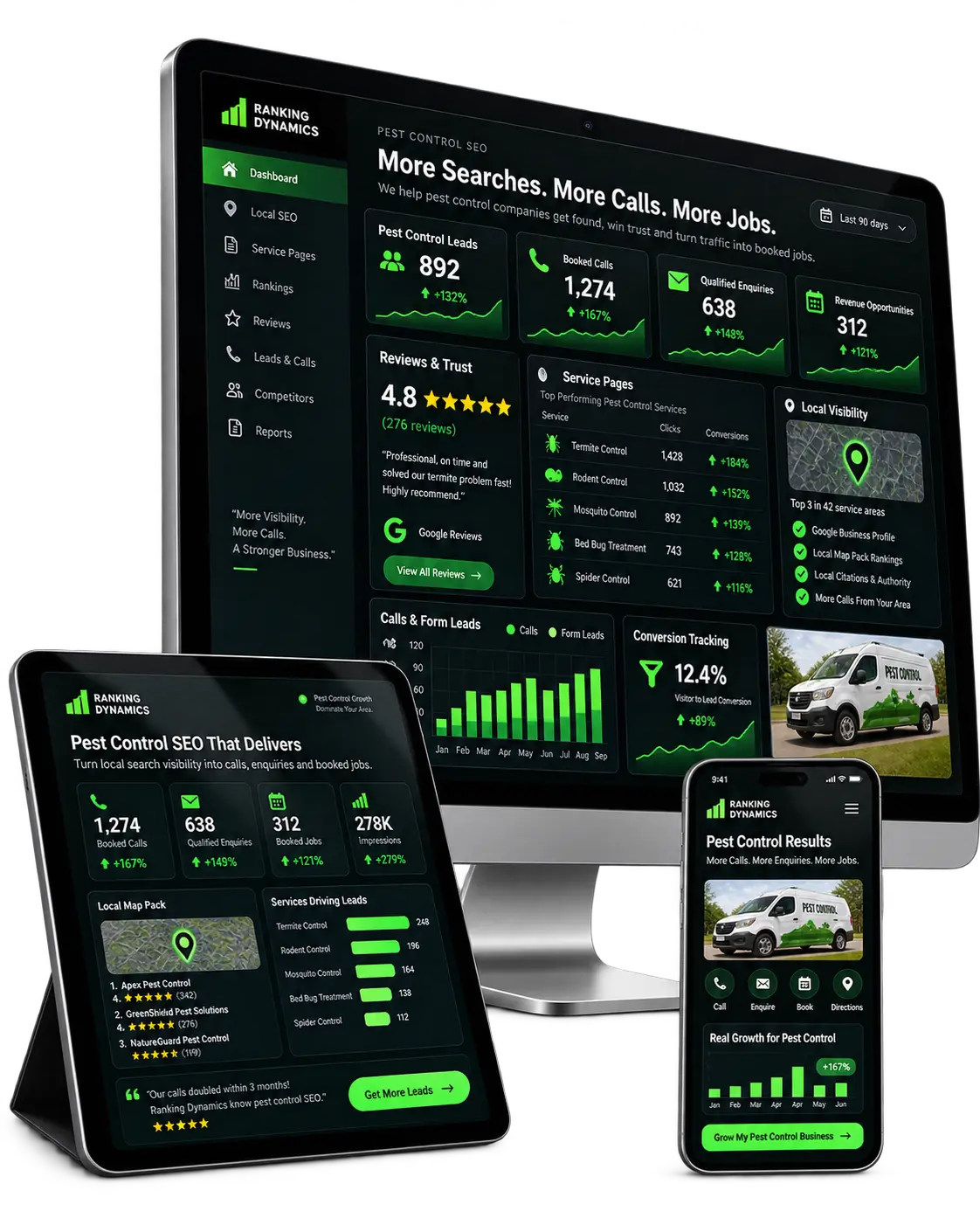
Pest control SEO connects every part of how Google decides who gets the call: your Business Profile, your service pages, your citations and your reviews. When all four point the same direction, a homeowner searching for an exterminator at 9pm finds you before they find the three competitors charging the same rates. We build that system, then report in booked jobs, not ranking positions.
Google Maps Visibility
Compete where nearby customers compare pest control companies when they need local help.
Organic Search Visibility
Build relevance for pest services, treatment needs, customer problems and the markets you serve.
Service and Location Pages
Organize important pest services and real service areas without creating thin or repetitive pages.
Authority and Conversion
Support visibility with reviews, local trust signals and a clearer path from search to contact.
Why Local SEO for Pest Control Companies Needs a Different Strategy
Pest control searches can be urgent, seasonal, pest-specific and highly local. The SEO strategy needs to reflect how customers search, compare companies and decide who to contact.
Urgent and Preventive Intent
Same-day infestations behave differently from routine inspections and preventive services. Your SEO structure should capture both urgent demand and customers planning ahead.
Pest-Specific Search Intent
Termites, rodents, mosquitoes and bed bugs create different customer problems and search journeys. Each major pest category should be supported by relevant service content without creating unnecessary thin pages.
Google Maps Shapes the Shortlist
Google Maps can influence which pest control companies customers compare first. Strong profile relevance, reviews and local signals help improve visibility across priority service areas.
Seasonality Changes Demand
Pest search demand changes with weather, breeding cycles and local conditions. SEO planning should account for seasonal peaks so important services are positioned before demand rises.
Trust Matters Before Entry
Customers want evidence before allowing a pest control professional onto their property. Reviews, real service photos and clear business information can reduce uncertainty before they make contact.
Fast Contact Wins More Jobs
High-intent pest control searches can turn into calls very quickly. Clear phone visibility, simple forms and strong response expectations help reduce friction between search and booking.
Pest Control SEO Has to Win the Search and the Decision
Our Pest Control SEO Services
We build one connected SEO system around search demand, local visibility, website relevance, trust and lead generation. Each part of the strategy supports the others so your pest control business can compete across Google Search and Maps.
Pest Control Keyword Research
We map pest problems, treatment searches, services and local demand around the way customers actually search. The research helps prioritize keywords with meaningful commercial intent instead of building pages around every variation.
Google Maps SEO
We strengthen Google Business Profile relevance, reviews and local signals around your priority service areas. Geographic rank tracking then shows where Maps visibility is strong and where further local SEO work is needed.
Service Page SEO
We optimize important pest services around distinct customer problems, treatments and search intent. Strong service pages help Google understand your expertise while giving customers a clear destination for the help they need.
Location SEO
We build useful local coverage around the cities and service areas your pest control business genuinely serves. Location pages are expanded only when demand, real coverage and unique local value justify a dedicated page.
Technical SEO
We improve crawlability, indexation, mobile performance, schema, canonicals and other technical foundations. A cleaner technical setup helps search engines access important pest service and location pages more efficiently.
Content SEO
We create useful content around pest identification, treatment options, prevention, costs and customer questions. Supporting content builds topical depth and internally strengthens the commercial pages that matter most.
Reviews and Trust
We strengthen the signals customers use when deciding whether a pest control company feels credible and dependable. Reviews, real service photos and clear business information can reduce uncertainty before a customer makes contact.
Backlinks and Citations
We build relevant backlinks and consistent local citations that strengthen your wider search authority. The focus remains on legitimate sources that support the pest control business rather than chasing link volume alone.
Internal Linking and Site Architecture
We connect pest services, locations and supporting resources through a clear internal linking structure. This helps search engines understand page relationships while directing authority toward important commercial pages.
Competitor and SERP Analysis
We study the pest control companies already earning visibility across your important services and markets. Their rankings, content and local presence help reveal gaps that can guide smarter SEO priorities.
Conversion and Lead Tracking
We look beyond rankings to understand what happens after customers reach your website or Google Business Profile. Calls, forms and qualified enquiries provide a clearer picture of whether SEO visibility is producing business opportunities.
AI Search Visibility
We improve entity clarity, structured information and useful content so your business is easier for modern search systems to understand. Strong underlying SEO remains the foundation whether customers discover you through traditional results or AI-assisted search experiences.
Every SEO Layer Supports the Next Customer Action
Pest Control Keyword Strategy and Website Architecture
Strong pest control SEO starts with a clear structure built around real services, customer problems and priority markets. We expand the website only when search demand and customer intent justify a useful dedicated page.
A Clean Pest Control Site Structure
Pest Control Company
The main business page establishes the broad commercial pest control topic. It should connect the company with its most important services, markets and conversion path.
Major Pest Services
Core services can cover termites, rodents, mosquitoes, bed bugs, ants and other meaningful pest problems. Each service should exist because customers genuinely search for a distinct solution.
Meaningful Treatments
Some treatments deserve deeper coverage when the process or customer need is genuinely different. We avoid splitting similar treatment keywords into repetitive pages that add little new value.
Priority Locations
Main cities and commercially important service areas should be prioritized first. Building authority in the strongest markets is usually more useful than publishing dozens of weak location pages at once.
Service + Location Pages
Service and location combinations can be useful where demand and SERP behavior clearly support them. Each page still needs enough local and service-specific value to justify its place in the website.
Important Subareas
Neighborhoods and smaller service areas can be added after the main markets have a strong foundation. Expansion should follow real business coverage and search opportunity rather than creating pages simply for scale.
Supporting Content
Helpful content can answer questions about pest problems, prevention, treatments, costs and timing. These resources should internally support the service and location pages closest to the customer’s next action.
Not Every Pest Keyword Needs Its Own Landing Page
Distinct Customer Problem
The keyword should represent a meaningfully different customer need or pest problem. Similar wording alone does not automatically justify another landing page.
Meaningful Search Demand
There should be enough relevant search interest to support dedicated content. Search volume is useful evidence, but it should never be the only reason a page exists.
Real Service Coverage
The company should genuinely provide the pest service or serve the location being targeted. SEO architecture should reflect the real business rather than creating coverage that does not exist operationally.
Enough Unique Value
A dedicated page should add useful information beyond what already exists elsewhere on the site. If the content would mostly repeat another page, consolidation is usually the stronger choice.
Useful Commercial Intent
The search should have a clear role in attracting or assisting a potential customer. Informational topics can still be valuable, but they usually belong in supporting content rather than commercial landing pages.
Different SERP Behaviour
Google’s results can reveal whether a topic is treated as a distinct search intent. If the same pages consistently rank across several keyword variations, one stronger page may be enough.
Clear Role in the Site
Every page should fit naturally into the wider pest control site architecture. Its internal links, parent topic and conversion purpose should be clear before the page is built.
Build Pages Around Search Intent, Not Keyword Count
Google Maps and Local SEO for Pest Control Companies
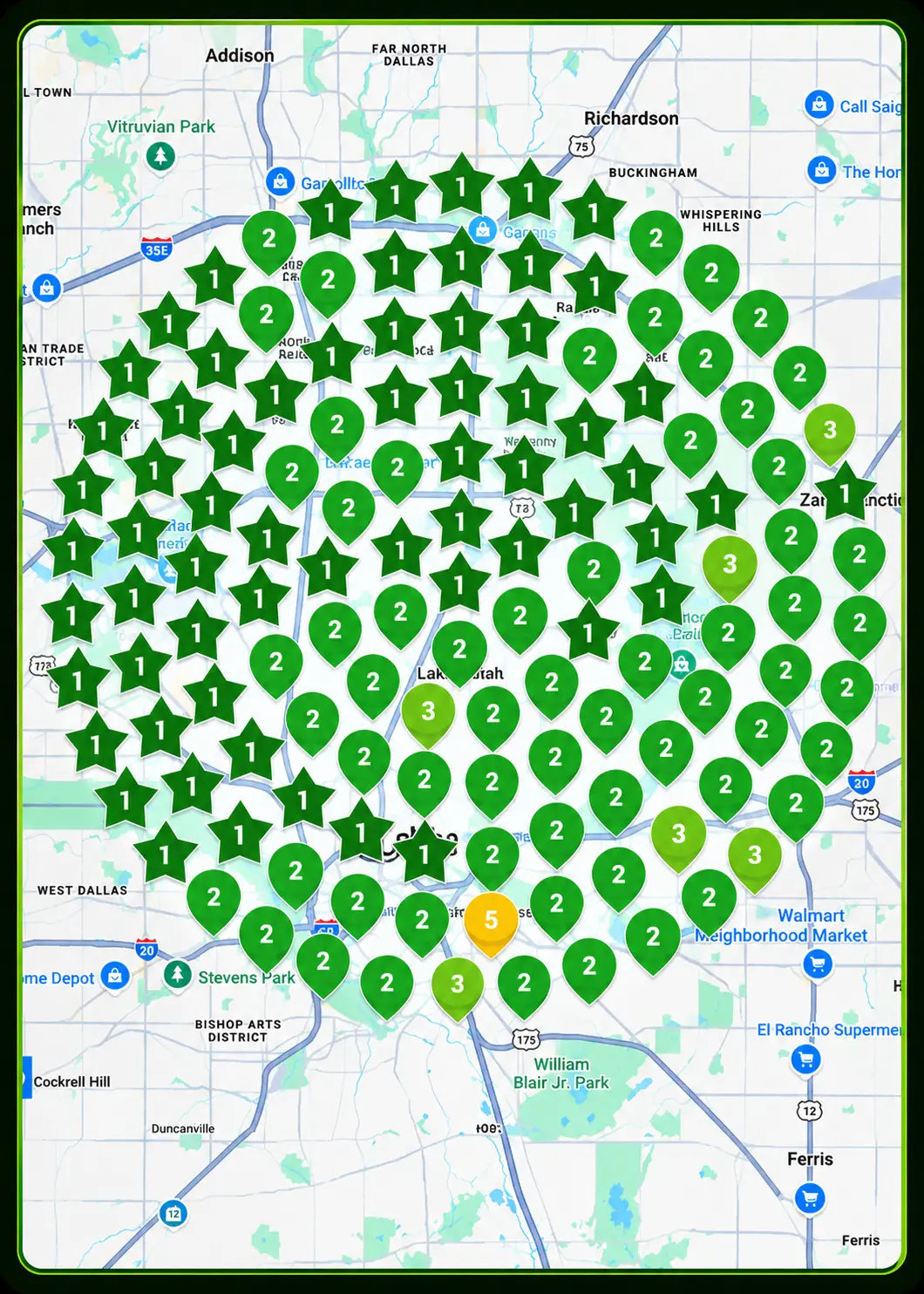
Local pest control rankings can change significantly across neighborhoods and service areas. Geo-grid tracking helps reveal where your Google Maps visibility is strong and where additional local SEO work is still needed.
See Local Rankings Across the Entire Service Area
One ranking position cannot show how visible a pest control business is throughout an entire market. Geo-grid tracking reveals how rankings change as the search location moves across different neighborhoods and service areas.
GBP Relevance
Your Google Business Profile should accurately reflect the pest services and markets your company actually serves. Categories, services and complete business information help Google understand when the profile is relevant.
Reviews and Trust
Recent reviews give potential customers evidence that the business is active and completing real pest control work. Consistent responses also strengthen the profile customers see before deciding who to contact.
Real Pest Control Photos
Real photos of technicians, vehicles, equipment and completed work strengthen the credibility of the listing. They also help customers see that they are dealing with an active local pest control company.
Local Citations
Consistent business information across relevant local and industry sources supports wider local search confidence. Citations should reinforce real business details rather than being created simply for volume.
Website Relevance
Your website should support the same pest services and markets represented in the Google Business Profile. Strong service and location pages give Google additional context around where the company should compete.
Geo-Grid Measurement
Geo-grid tracking shows how Maps rankings change across a real service area instead of reporting one isolated position. It makes weak areas easier to identify and shows whether visibility is expanding over time.
See Where Your Pest Control Business Actually Ranks
Different Pest Problems Create Different Search Journeys
Pest control customers do not search for every infestation in the same way because urgency, treatment needs and expectations can differ. The website should reflect those differences without turning every keyword variation into another thin landing page.
One Business, Multiple Pest Search Journeys
Major pest problems can deserve their own service experience when customers search for a clearly different solution. The site structure should organize those topics around genuine service intent rather than keyword repetition.
A termite customer may need different information from someone searching for mosquito or rodent control. Dedicated service coverage should exist when that difference creates a genuinely useful page for the customer.
This approach also keeps the website easier for search engines and customers to navigate as more pest services are added. Each important service gains a clear role without creating multiple pages that compete for nearly identical searches.
Service Pages Should Match Real Search Intent
Separate pest pages should be based on meaningful differences in the customer journey and the services being offered. Search behavior and business value should guide the decision before another landing page is added.
Problem Severity
An active infestation can create much stronger urgency than a routine preventive service. The content and conversion path should reflect how quickly the customer is likely to need help.
Treatment Differences
Different pests can require different inspections, treatment methods and customer preparation. A dedicated page becomes more useful when those differences create enough unique information to explain.
Commercial Value
Some pest services contribute more revenue or recurring value to the business than others. The SEO structure should prioritize commercially important services while still reflecting real customer demand.
SERP Evidence
Google's results can show whether a pest topic behaves like a distinct search destination. When the same pages rank across several variations, one stronger service page may be the better choice.
Match the Page to the Search Journey
Emergency and Same-Day Pest Control Searches
Some pest searches begin when a homeowner or business needs help quickly rather than weeks from now. Your search visibility and page experience should make the relevant service, local coverage and next action easy to understand.
Urgent Pest Problem
An active infestation can turn a routine search into an immediate buying decision. The page should recognize that urgency without forcing a ready-to-act customer through an unnecessarily long research journey.
Search + Maps Moment
Customers may discover a pest control company through Google Maps or the organic results beneath it. The business needs enough local relevance and service clarity to earn attention wherever that comparison begins.
Exact Service Match
A customer searching for termites, rodents or bed bugs needs to see the relevant service quickly. Clear pest coverage and availability reduce the chance that a high-intent visitor keeps comparing competitors.

Emergency-Ready Service Page
The destination page should confirm the pest problem, service area and what the customer can do next. When same-day or emergency service is genuinely offered, that availability should be stated clearly rather than implied.
Local Proof Before Contact
Reviews, real service photos and accurate business information help reduce hesitation before someone calls. These signals matter even more when the customer is choosing quickly and may allow a technician onto the property.
Fast Contact Path
Phone numbers and forms should be easy to find on high-intent pages and mobile screens. A simple contact path shortens the distance between the search, the enquiry and the booked pest control job.
Residential Pest Control SEO for Local Homeowner Searches
Homeowners usually search because they have identified a pest problem or want help preventing one from getting worse. Residential pest control SEO should connect that problem with the right service, local proof and an easy path to contact.
From Pest Problem to Pest Control Provider
Residential customers often move from discovery to comparison quickly when the problem is inside or around their home. The website needs to answer the most important questions before the customer decides who deserves the call.
Identify the Problem
The customer notices insects, rodents or another sign of activity around the property. Their first searches often try to identify the pest and understand how serious the problem might be.
Find a Local Provider
Once professional help feels necessary, the search becomes more commercial and local. Google Maps and service pages begin shaping which companies enter the customer's shortlist.
Check Trust Signals
Homeowners compare reviews, real photos, service information and evidence that the company operates locally. Strong proof can reduce hesitation before someone invites a technician onto the property.
Request Service
The customer needs a clear way to call, request an inspection or submit a service enquiry. A simple conversion path helps prevent a high-intent visitor from returning to the search results.
Clear Pest Coverage
Customers should quickly understand whether you handle the pest problem affecting their home. Clear service coverage connects high-intent searches with the most relevant page.
Local Service Confidence
Homeowners want to know that the company genuinely serves their area and can respond locally. Accurate location information supports both customer confidence and local SEO.
Real Residential Proof
Reviews and real service photos provide evidence that the company works with homeowners like them. Visible proof helps reduce uncertainty before the first phone call or enquiry.
Recurring Pest Prevention
Some residential customers need more than a single treatment to keep pest activity under control. SEO can introduce ongoing prevention options after the immediate problem has created the first customer relationship.
Make the Next Step Obvious
Commercial Pest Control SEO for Higher-Value Contracts
Commercial pest control buyers often evaluate providers differently from homeowners because the relationship may involve multiple sites, compliance needs or recurring service. SEO should present enough capability and credibility to move a business buyer toward a quote or longer-term service agreement.
Search Is Only the Beginning of the Contract Decision
Business customers may compare service capability, response expectations, documentation and recurring coverage before they contact a provider. Commercial SEO should make those answers easier to find while keeping the path to a quote straightforward.
Show What the Business Can Actually Handle
Commercial buyers need to understand which facilities, pest problems and service arrangements the company can support. Detailed service information helps qualified prospects determine whether the provider fits their operational needs.
Build Confidence Before the Sales Conversation
Commercial prospects may expect stronger evidence of reliability than a simple residential service enquiry requires. Reviews, real company information and proof of professional operations can strengthen confidence before the first conversation.
Match Commercial Search Demand to Real Coverage
Commercial pest control pages should reflect the markets and customer types the business genuinely wants to serve. Clear positioning helps prevent broad SEO traffic from replacing the higher-value opportunities that matter most.
Service Area and Location SEO for Pest Control Companies
Pest control companies often serve a wider area than the neighborhood around their office or Google Business Profile. Location SEO should expand visibility around commercially important markets without creating repetitive pages for places the business cannot meaningfully support.
Build Local Authority Outward From the Core Market
The strongest location architecture begins with the company's real operating market and priority service areas. Expansion can then move outward as demand, business coverage and available content justify additional local depth.
Not Every Place Needs a Landing Page
Location pages should exist because there is a useful search and customer reason for them. Building too many similar pages can weaken the architecture instead of strengthening the markets that matter.
Real Service Coverage
The company should genuinely be able to serve the location being targeted. Local SEO should reflect operational reality instead of manufacturing a service footprint that does not exist.
Meaningful Local Demand
The market should contain enough relevant demand to deserve a dedicated local destination. Search interest matters, but commercial importance and real customer behavior should also guide the decision.
Unique Local Value
A location page should provide more than a swapped city name and repeated service copy. Real local context, service coverage and useful customer information give the page a reason to exist.
Service + Location Opportunity
High-value pest services may justify deeper city-specific coverage when search intent clearly supports it. These pages should be added selectively after the main location structure is already established.
Technical SEO and Content Strategy for Pest Control Companies
Local visibility depends on more than service pages and Google Maps. The website also needs a technically sound foundation and useful content that helps search engines understand the business while answering the questions real pest control customers ask.
Make Important Pest Control Pages Easy to Find and Understand
Technical SEO helps search engines crawl, interpret and index the pages that matter to the campaign. A cleaner technical foundation also reduces problems that can weaken service and location visibility as the site grows.
Crawlability
Important pages need to be accessible to search engines. Broken paths and unnecessary crawl barriers can hide useful content.
Indexation
Search engines should index the pages that deserve to rank. Weak or duplicate URLs can create unnecessary competition.
Mobile Performance
Many pest searches happen on phones when customers need help. Fast mobile pages make the path from search to contact easier.
Core Web Vitals
Stable and responsive pages create a better browsing experience. Performance work should support usability instead of chasing scores.
Schema
Structured data can clarify important page and business information. Schema should describe real content rather than manufacture signals.
Canonicals + Redirects
Canonicals clarify which URLs represent the preferred content. Redirects should preserve authority when pages move or consolidate.
Internal Architecture
Service, location and supporting pages need meaningful relationships. Internal links should move authority toward important commercial pages.
XML Sitemaps
XML sitemaps should surface the URLs that matter to the website. Clean crawl signals help search engines discover important pages efficiently.
Publish Around the Questions Customers Actually Ask
Informational content can capture people before they are ready to choose a pest control provider. The strongest topics answer real questions while creating relevant internal paths toward the service pages that solve the problem.
Pest Identification
Customers often search before knowing exactly which pest they have. Identification content can connect those searches with the correct service.
Treatment Options
People often research how different pest problems may be treated. Useful explanations can build confidence before they book service.
Pest Control Costs
Cost searches often appear during the customer comparison stage. Educational content can explain the factors that influence pricing.
Prevention Questions
Customers frequently search for ways to stop pests from returning. Prevention content can naturally support recurring pest control services.
Seasonal Pest Demand
Pest activity can change with weather and seasonal conditions. Timely content can capture topics as local demand begins to rise.
Commercial Pest Questions
Business buyers may research recurring coverage and facility pest risks. Commercial content can support those searches before a quote request.
Local Pest FAQs
Local conditions can create questions specific to one service market. Useful FAQs can strengthen relevance without creating another thin page.
Emergency Search Questions
Urgent customers often search for availability and expected response times. Helpful answers can direct those visitors toward the relevant pest service.
Connect Customer Questions to the Right Service
Build the Trust Signals Behind Strong Pest Control SEO
Customers need evidence that the pest control company is active, credible and capable of solving the problem they are searching for. Search visibility becomes more valuable when real business signals support what customers see before they make contact.
Customer Reviews
Recent reviews show how real customers describe the service, response and overall experience. Consistent review activity helps reduce hesitation when someone compares nearby pest control providers.
Real Service Photos
Photos of technicians, vehicles, equipment and field work give the company visible proof of real activity. They also help customers see the people and operations behind the business before making contact.
Relevant Backlinks
Links from legitimate and contextually useful sources can strengthen authority around important pest control pages. Relevance and quality should matter more than creating links simply to increase volume.
Accurate Local Citations
Local and industry listings should reinforce consistent business information across relevant sources. Accurate citations strengthen the local footprint while giving customers additional places to verify the company.
Build Trust From Real Business Signals
Turn Pest Control Search Visibility Into More Calls and Bookings
Rankings create the opportunity to be seen, but visibility alone does not create a new customer. The page still needs to answer the questions that determine whether someone contacts your business or continues comparing other pest control companies.
What Customers Need Before They Contact You
Do You Treat This Pest?
The service match should be obvious without making the customer search through unrelated pages. Clear pest coverage helps confirm that they have reached the right company.
Do You Serve My Area?
Customers want confidence that the company genuinely operates where they need help. Clear service areas remove uncertainty before the first enquiry.
Can I Trust Your Team?
Reviews, real photos and clear expectations help reduce hesitation before someone contacts the company. Trust matters even more when a technician may need access to the customer's property.
How Do I Get Help?
Calls, forms and quote requests should be easy to find from high-intent service pages. A clear next action reduces unnecessary friction between search and contact.
Measure What Happens After the Ranking
The goal is not simply to improve a keyword position and stop there. The stronger measurement system connects visibility with qualified enquiries and the pest control work those enquiries eventually produce.
Calls and bookings show whether search visibility is reaching people who are actually ready to hire a pest control company. Tracking those outcomes helps reveal which services, locations and landing pages deserve more attention as the campaign grows.
How We Build Local SEO Campaigns for Pest Control Companies
Technical SEO, Google Maps, content and authority should support the same commercial priorities instead of operating as disconnected tasks. Our campaign process builds the foundation first and then uses performance data to decide where the next SEO effort should go.
Audit Search Demand and Competition
We map the pest services, locations, competitors and search opportunities that matter to the business. This gives the campaign a commercial priority before pages, content or links are created.
Fix the Technical Foundation
We address crawl, indexation, site architecture and technical problems that can limit important pages. A stronger foundation makes later service, location and content work easier to support.
Build the Pest Search Architecture
We connect major pest services, priority markets and supporting content into a clear site structure. Each page receives a defined role instead of competing with several near-duplicate destinations.
Strengthen Google Maps and Local Trust
We improve the local signals surrounding the Google Business Profile, website and real service area. Reviews, photos, citations and local relevance should reinforce consistent business information.
Build Content and Search Authority
We publish useful content around real customer questions and important pest topics. Relevant backlinks and internal links then help strengthen the commercial pages the campaign is designed to grow.
Measure Leads and Expand What Works
We review search visibility, Maps coverage, enquiries and useful performance signals as the campaign develops. Those results help determine which services, markets and opportunities should receive the next investment.
Build, Measure and Expand With Evidence
Pest Control SEO Questions Before You Start
Pest control companies usually have questions about Google Maps, service pages, locations, content and the time required to build stronger organic visibility. These answers explain how we approach the most important decisions before an SEO campaign expands.
What is pest control SEO?
Pest control SEO improves how a pest control company appears across organic search and local results when customers search for relevant services. The strategy connects technical SEO, service content, location relevance, Google Maps visibility, authority and conversion into one search system.
Let’s Look at Your Search Opportunity
Get Help With Your Pest Control SEO Strategy
Tell us about your pest control company, primary market and current search goals. We’ll review the information and identify the local, organic and website opportunities worth discussing first.
Your Pest Control SEO Request Has Been Sent
We’ll review your company, target market and SEO priorities before replying with the areas that appear most useful to discuss.
Review Our Pest Control SEO Process →